
If you have visited my blog before you may well have seen this photograph. This is Burnside Row, Newmains which was more commonly known as Furnace Row. It is here that so many of my family were born, lived and died.
The photo was taken around 1910 and shows a row of houses which were constructed in the 1840s to house workers from the Coltness Iromworks which you also see in the photo. I’ve highlighted the location on the map below.

A report from 1910 describes the condition of the housing in Newmains at that time.

You’ll notice that Burnside Row was the cheapest option for the local workers. There were a total of 33 homes consisting of just one or two rooms. In the 1891 census there were a total of 191 people recorded as living there. As well as housing families many homes also had lodgers to help make ends meet. The Gallagher family had a Russian family boarding with them. Between the 1890s and 1920s many Lithuanians emigrated to Scotland to flee tyranny and poverty in what was then part of the Russian empire. They were actively recruited by Scottish coal and iron companies.
Many of the residents were born in Ireland or were first generation descendants of Irish immigrants. These people were the poorest in the village and I share DNA with many of them.
My maternal grandfather’s parents Dan and Ellen Brawley were at number 12 with their sons Dan and James. His maternal grandparents Pat and Agnes Keenan were at 14. His uncle James lived at number 4 and his uncle Peter at 15.
My granny’s grandparents Peter and Catherine Cosgrove were at 18, her parents were at 27 and Edward Cooper who would later become her stepfather was at number 14. Both the Cooper and Keenan families show at 14 although both males are shown as head of their respective houses and not as lodgers. There are several other names that link to my family tree through marriage.
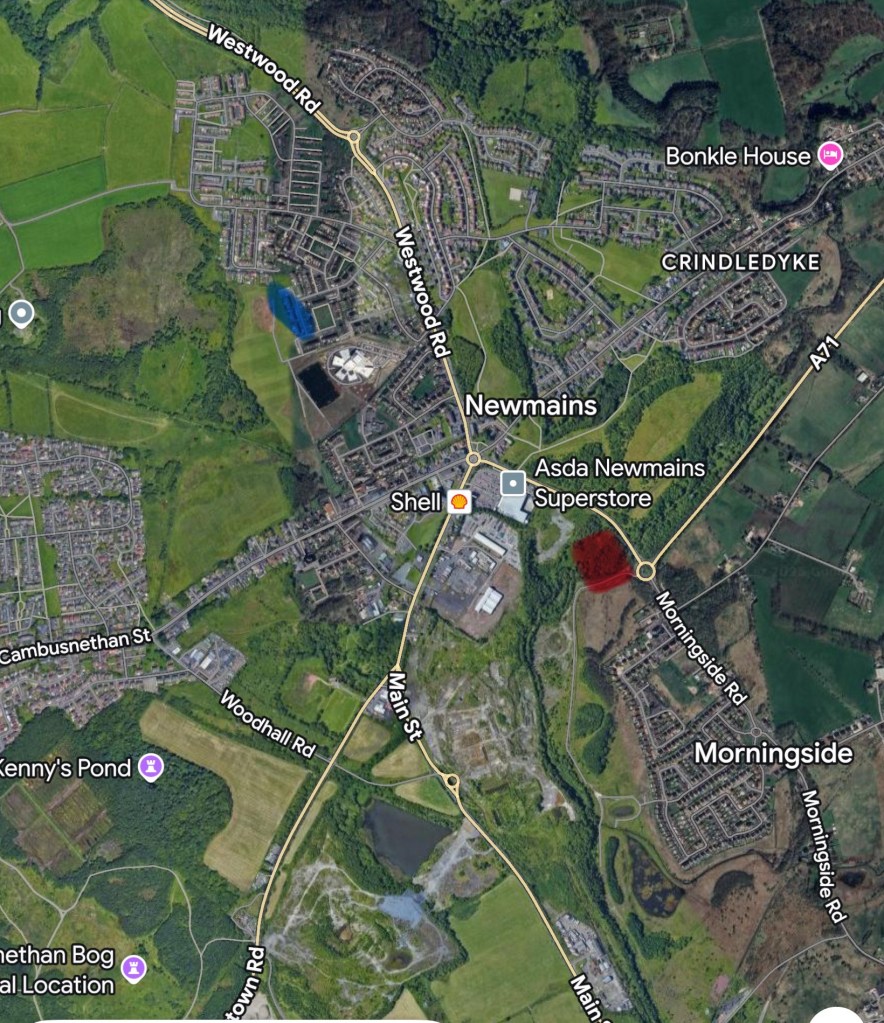
This is Newmains today. The area in red is where Furnace Row used to be and the street marked in blue is where I grew up. In the 1930s new homes were built and the area on the map shown as Crindledyke is where many of the families who had grown up in the row housing relocated. My mother and her family moved from Main Street to Crindledyke Crescent in 1939. The street where I grew up was built in 1968.
Click here to view the National Library of Scotland maps which allows you to overlay old maps with new ones to help compare and get your bearings. Slide the line on the bottom right to switch between the two.
You can see from the map that it’s still quite a small village but until last week I’d never been to Furnace Row. The houses and the iron works are long gone and the site is now fenced off. But having travelled to Ireland to visit the birthplaces of ancestors I felt it really was time to see a local place of such importance and if that meant climbing a fence then that’s what I’d have to do!
I’ve been talking about this for a while. It was also of interest to my friend Maureen who I met through this blog. She reached out to me and we met up and have since become good friends. Her great grandfather was the Edward Cooper I mentioned earlier who lived at number 14. At that time he was living with his first wife. Maureen’s granny was there too.
Maureen enlisted the help of her cousin Douglas who knows the Furnace Row area well having been taken there as a boy by his father. It’s thanks to him that we found the exact location.
The area is now completely overgrown and at first it was hard to imagine a busy street and all those people crammed together living their lives there.
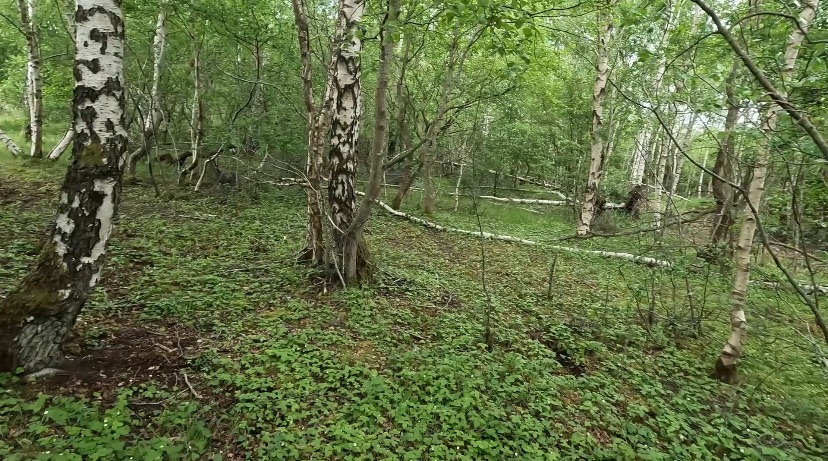
Then Douglas spotted something. Pieces of brick or pottery all covered in moss. He started digging them out and fitting the pieces together into what appears to be part of a chimney.
We also discovered part of a fireplace grate.

In the first map you will see railway lines which were very much needed to carry the coal and other goods relating to industry in the village. Walking further into the site we saw the old railway bridge

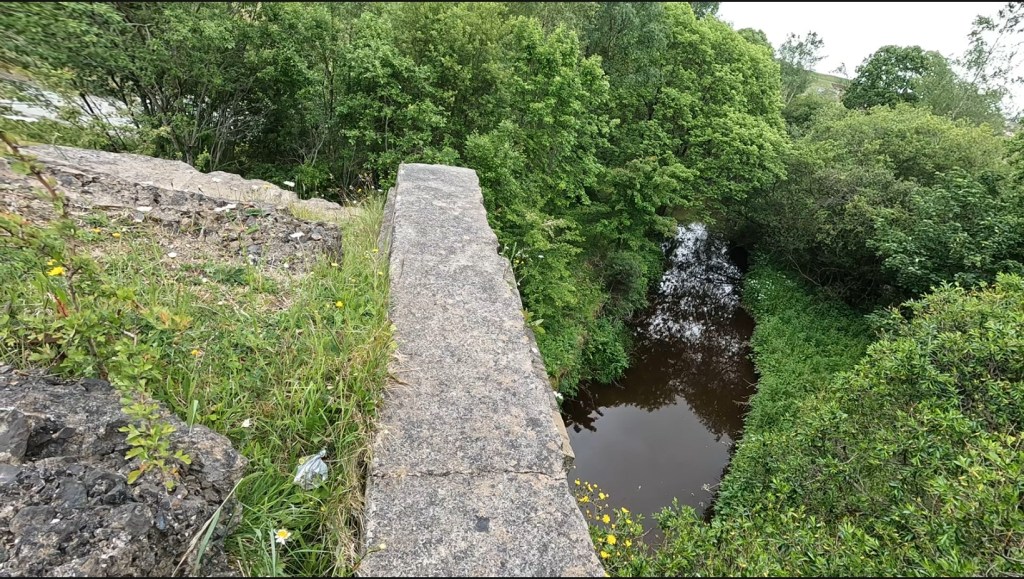


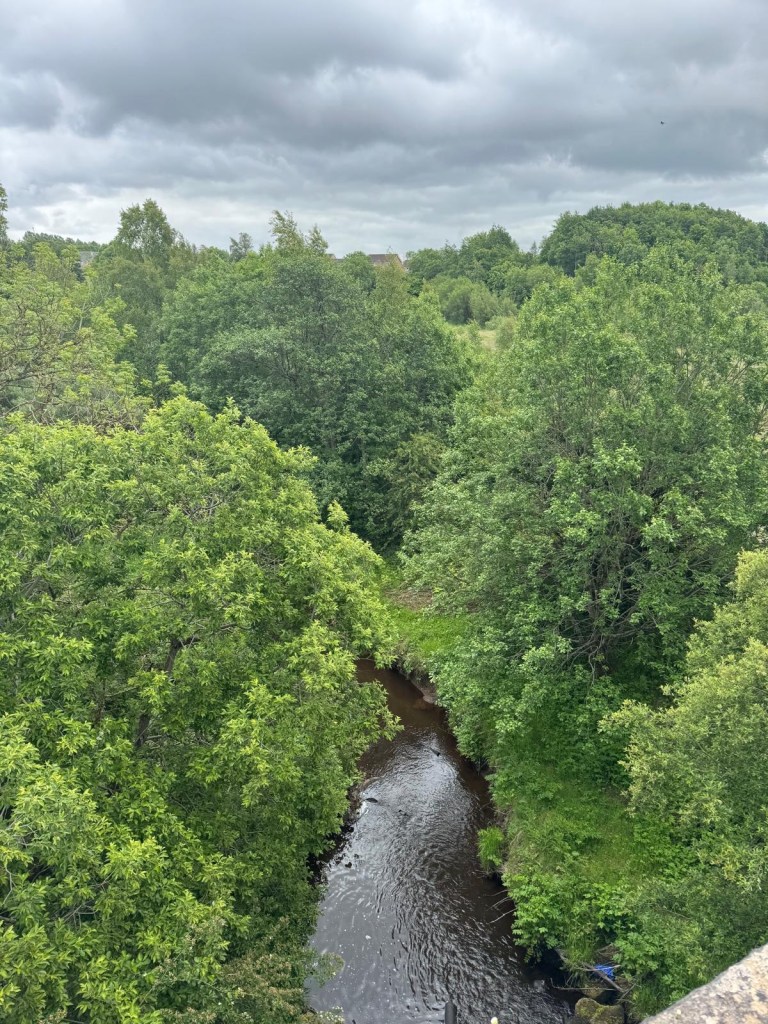

It was all so quiet and the air was fresh in complete contrast to the area back in 1891. At first I felt a bit disappointed and sad that there was so little to see but having had time to reflect I think it’s a good thing. Would I like to see it as it was? Yes I would but the truth is these were horrible living conditions. Families forced to live with strangers in tiny houses without even basic sanitation. No safe place for the children to play. A place full of smoke and dust and disease. Life expectancy was low. Infant mortality was high. Their lives were unimaginably hard.
Standing there I did feel close to them but I also felt gratitude for being born in a different time. Furnace Row has been reclaimed by nature and I believe that’s for the best.
 Shaking The Branches